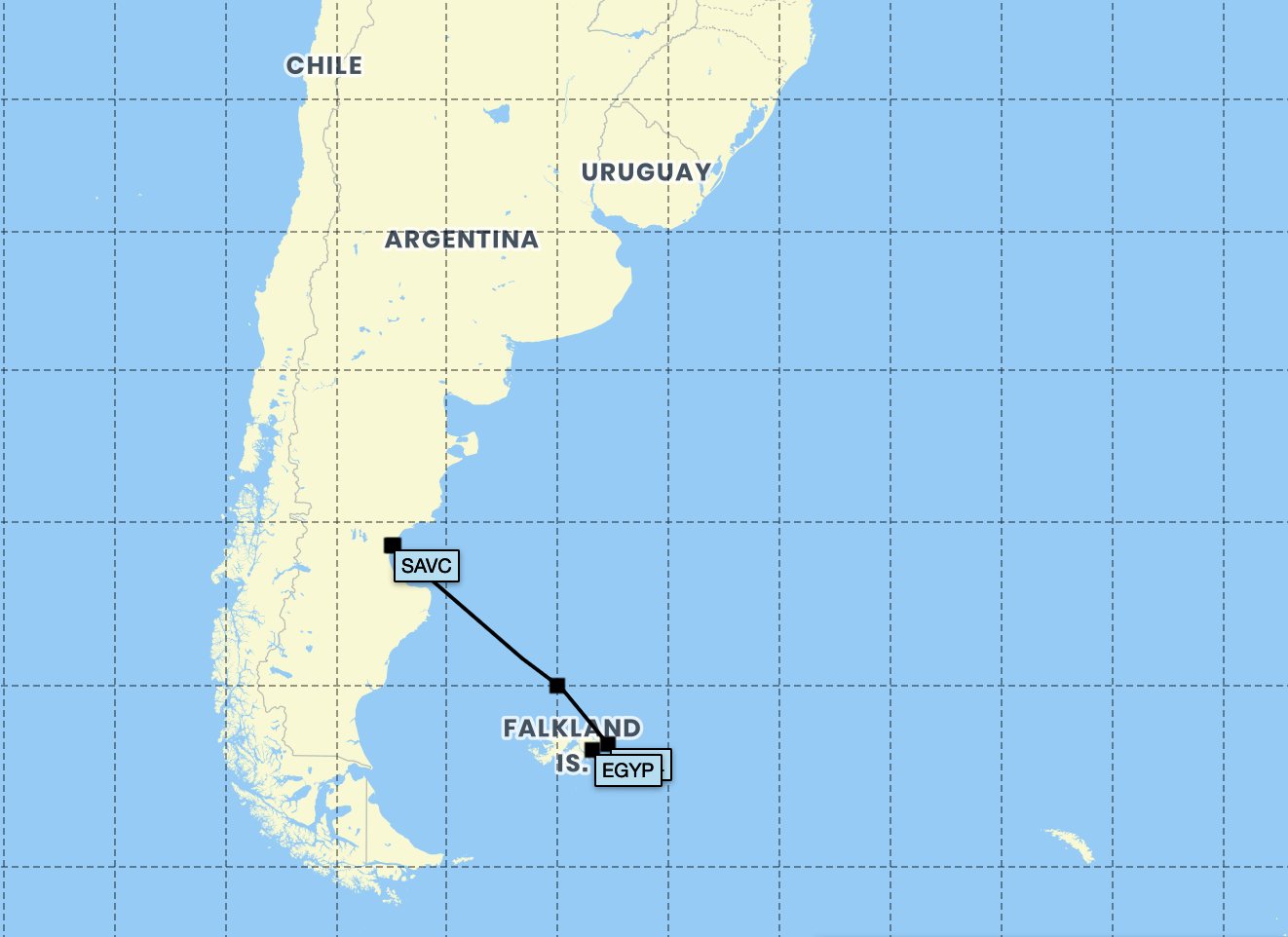
SAVC - SFAL
Aeropuerto Internacional General Enrigue Mosconi - Port Stanley Airport
Today’s flight is going to be interesting, due to historical and political reasons.
Remember I told you we were going to spend a lot of time inside Argentina (after we left Uruguay)? Well, that was technically not true. Because today, we are going to the Falkland Islands.
We first take off from Comodoro Rivadavia and quickly get feet wet.
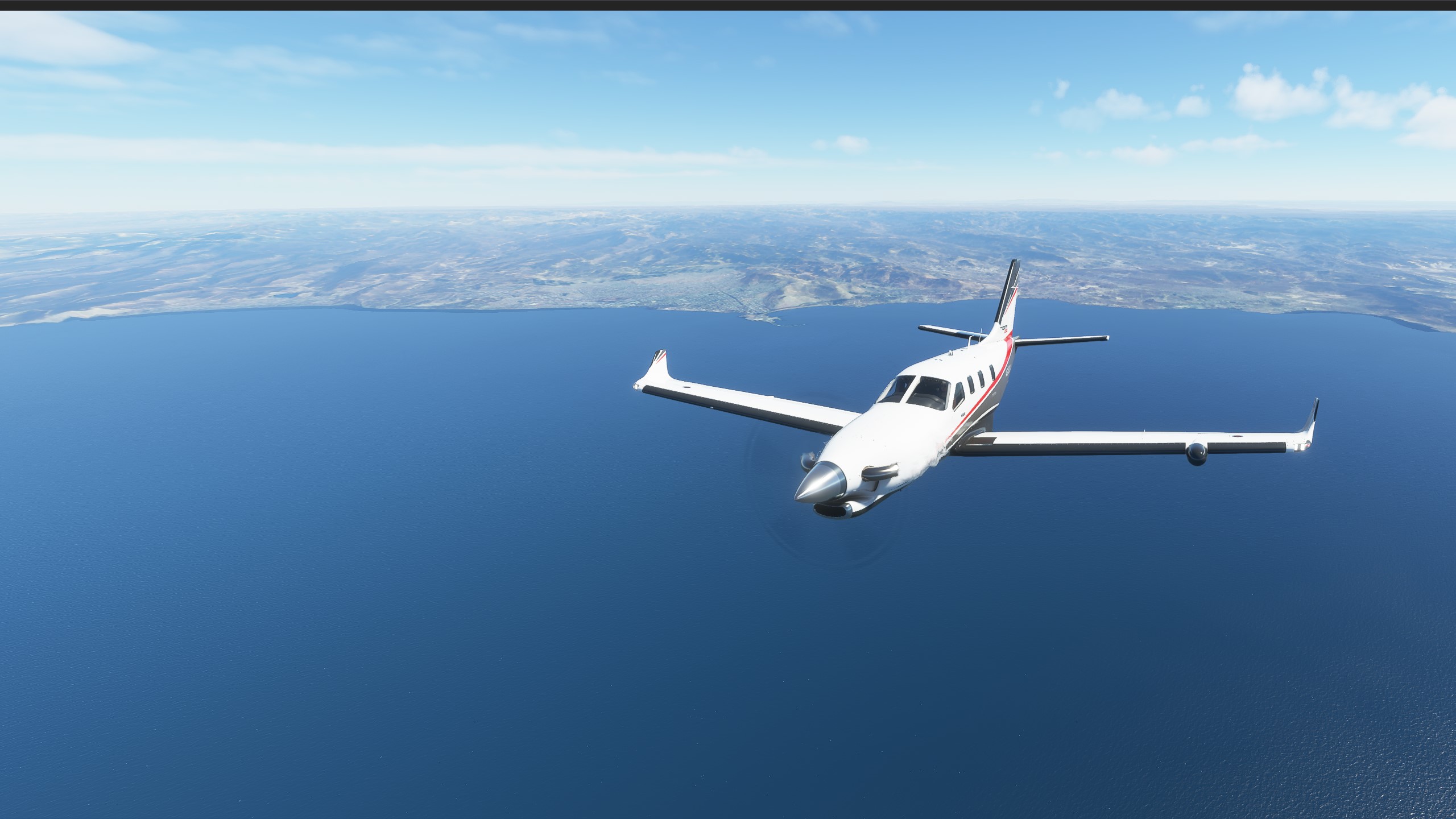
The Falkland Islands is a British Oversees territory. But it has been a disputed territory for a long time. The British claimed control of it in 1833, but Argentina has always held a claim against that ever since. In April 1982, Argentine military forces invaded the islands, which triggered a prompt military reaction from the UK government (led back in then by Margaret Thatcher). This was the beginning of the Falklands war. The islands were brought back under UK rule 2 months after the invasion, with the Argentinian military suffering a solid defeat.
This episode is important to me because, here in Switzerland, I met an English man who fought in that war, as a sniper with the British army. His stories of the war are not fun. But the thing that stuck with me most were his statements that, even though the Argentine military was no match against the powerful UK military, the Argentine soldiers were brave, courageous and a dangerous enemy. There is a lot of respect for these soldiers among the ranks of the British army.
As we progress southeast, the weather starts turning bad:
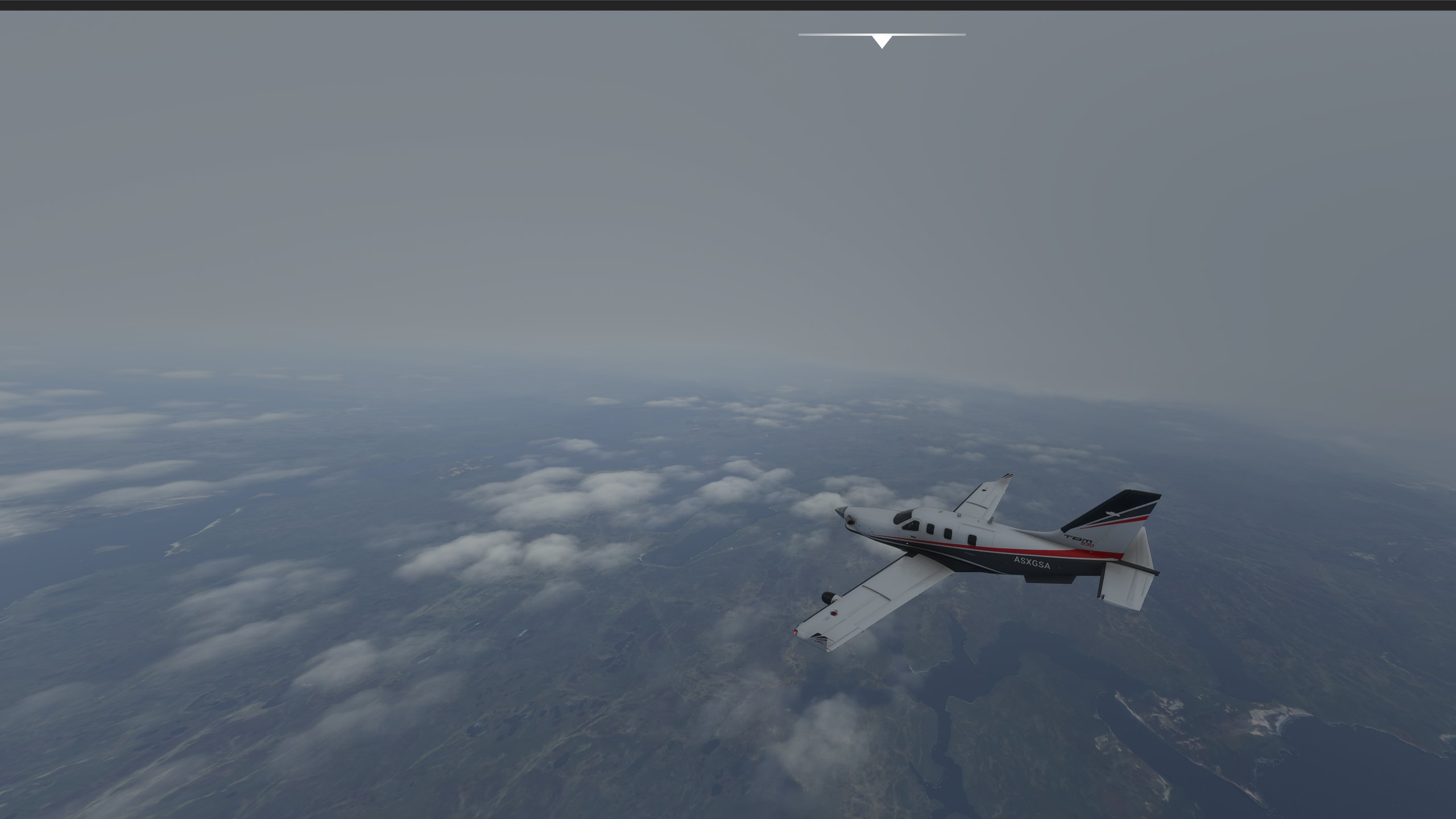
We are taking a 70kt tail wind, but the approach to the Falkland Islands is going to be rough. The airport of the capital, Port Stanley, only has 1 runway (09/27), and the wind is almost perpendicular to the runway, blowing at 33kts.
For the approach, I come in right over the airport and turn heading 076, to later perform a teardrop approach into runway 27.
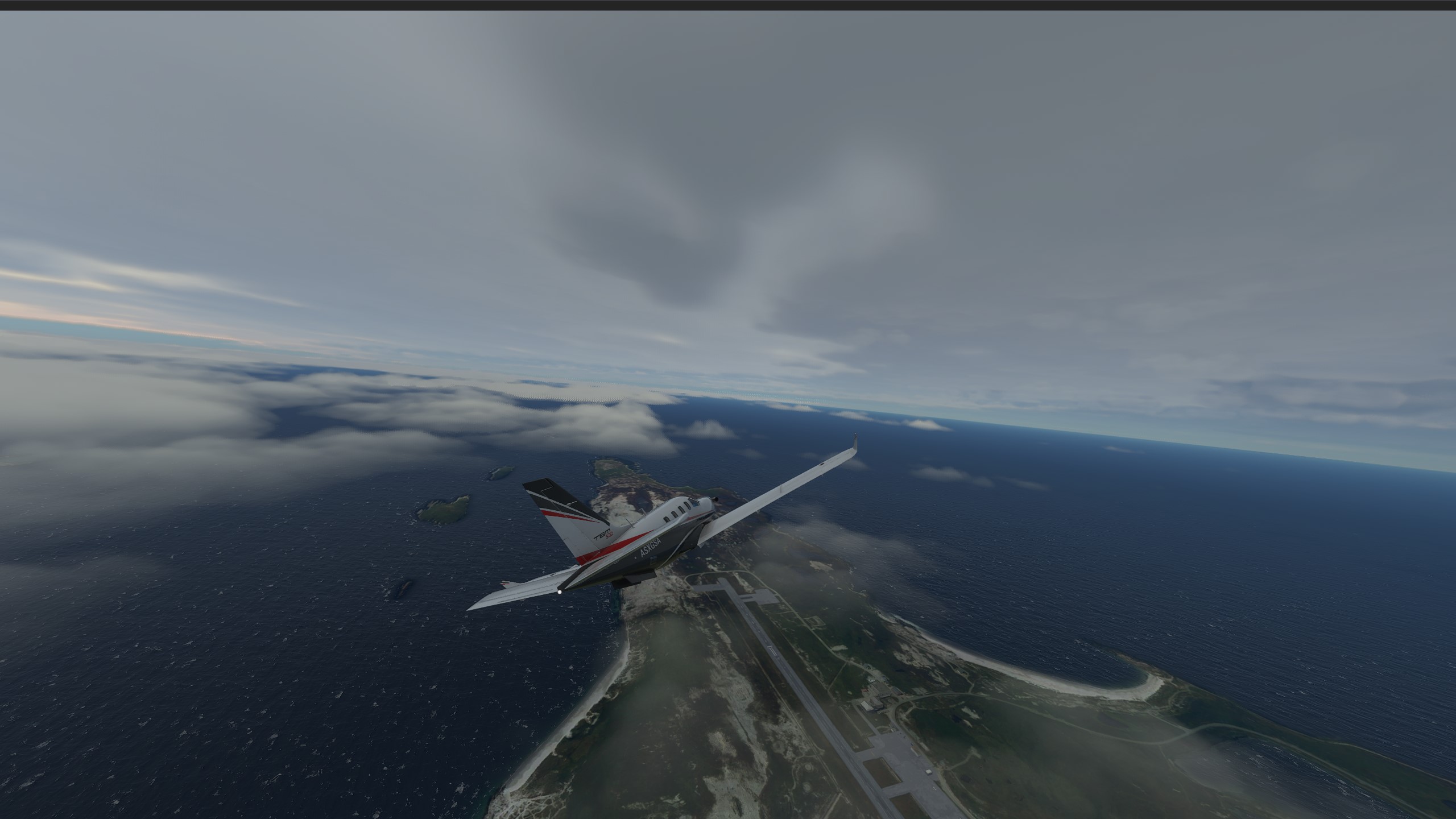
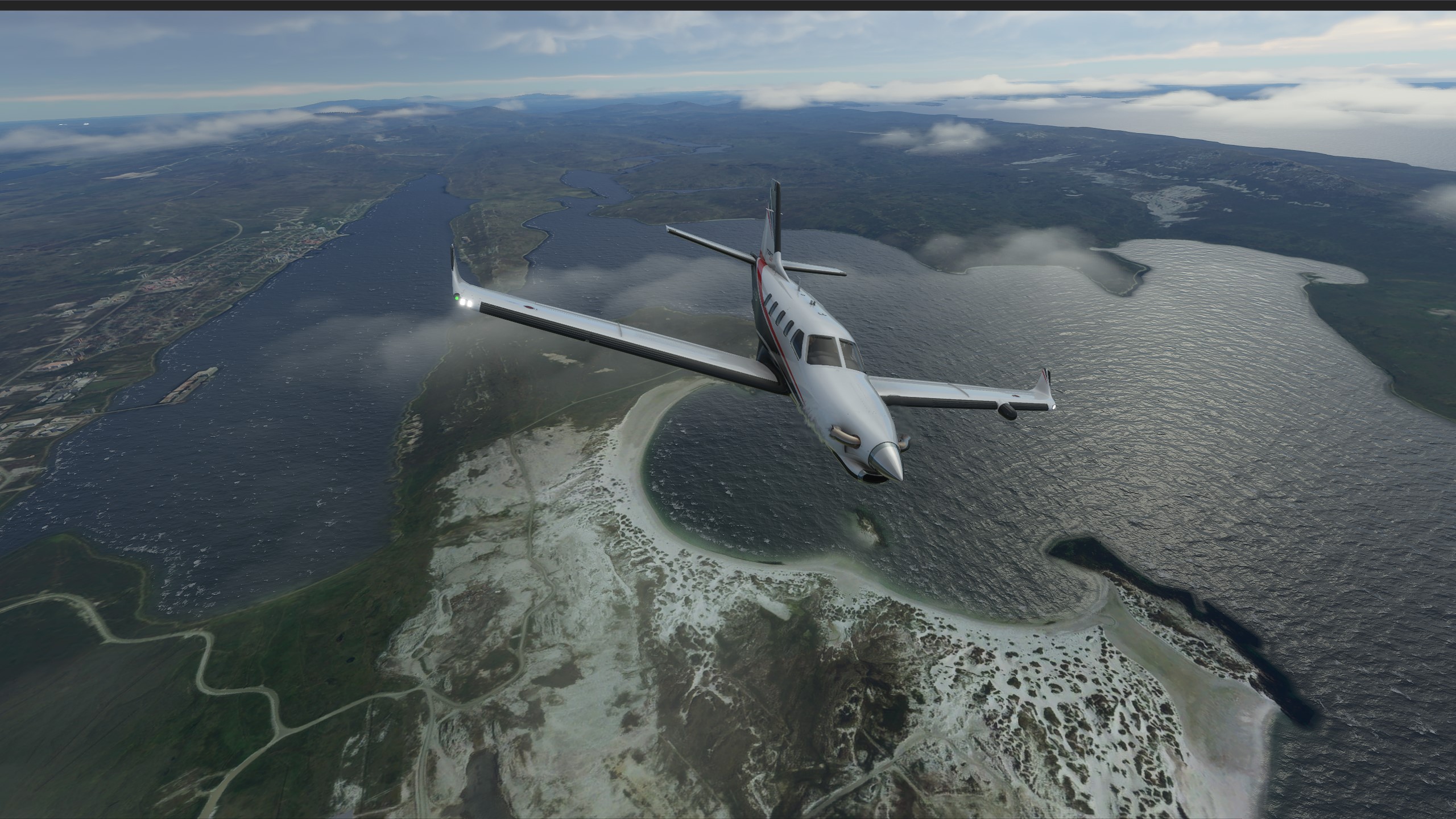
Needless to say, as I turn right to do the teardrop, the crosswind is blowing the plane way off to the south, so I end up in quite a bad position for the final approach:
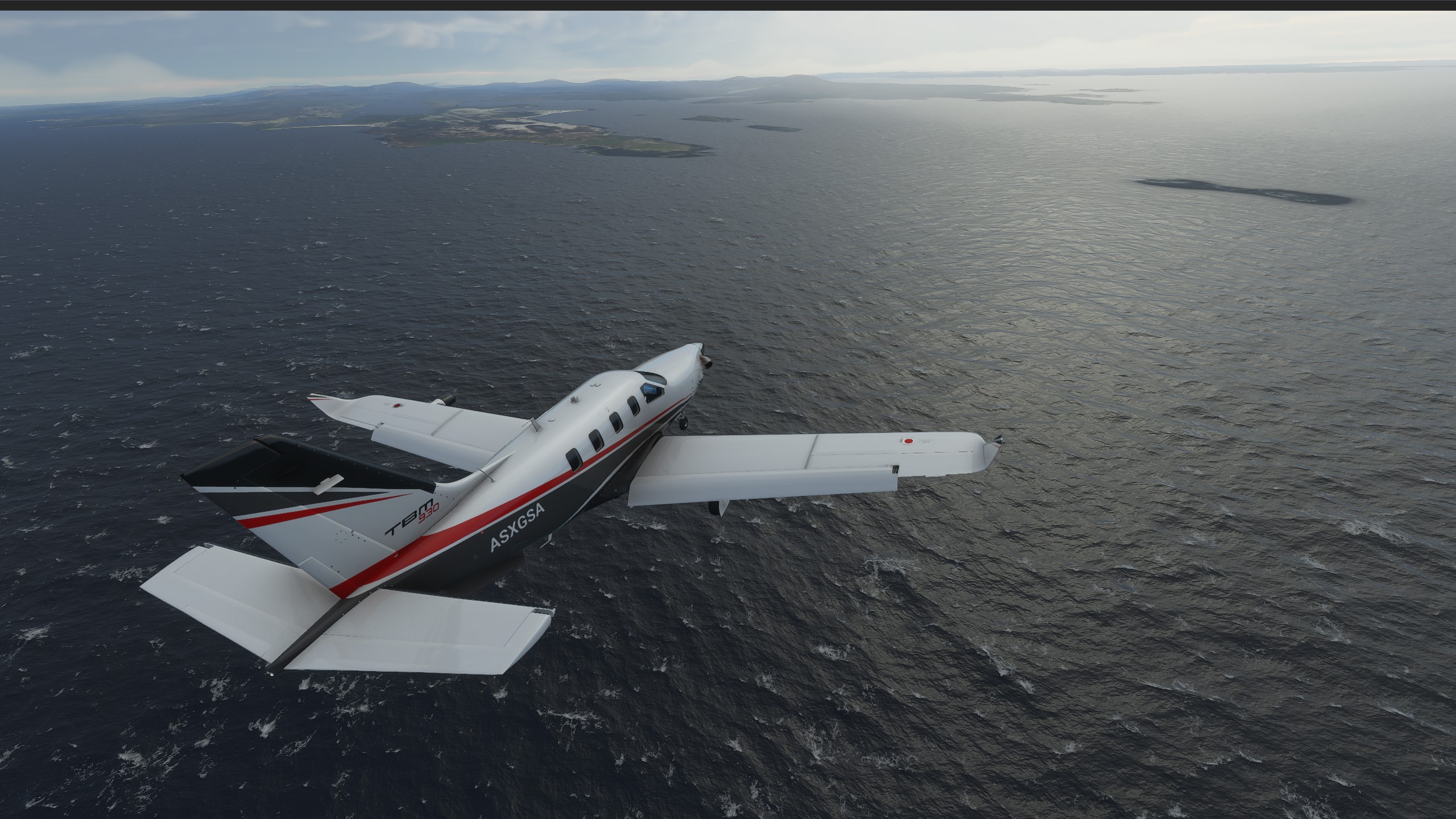
The crosswind is brutal. You can see that from the rough water in the pic above. I start to wonder if I am landing within the operating tolerances of the aircraft. Coming in at an approach IAS (Indicated Airspeed) of 80kts, the actual ground speed was a mere 47kts, due to the head/crosswind hitting the aircraft.
There’s two ways to do a crosswind landing:
Since my aircraft does not have a lot of clearance between the wings and the floor, I chose the crab technique. The difficulty with this technique is that, as you get close to touchdown, the nose of the aircraft is actually pointing into the direction of the wind, not the direction of the runway. So just barely before touchdown, you need to apply aileron and rudder power to bring the forward movement of the aircraft in the same direction as the runway, otherwise the wheels will be touching the tarmac in an incorrect orientation and that might cause severe damage to the landing gear. Correct the nose orientation too early, and the wind will blow you off from the runway just before touchdown. Correct is too late, and you’ll be touching down with the wheels at the wrong angle.
Well, I corrected too late :)
It was a very rough touchdown. Not because I touched down hard, but because the wheels were not properly aligned with the direction of the runway fast enough. If this were real life, I am sure this would have damaged the tires.
But as they say: Any landing you can walk away from, is a good landing.
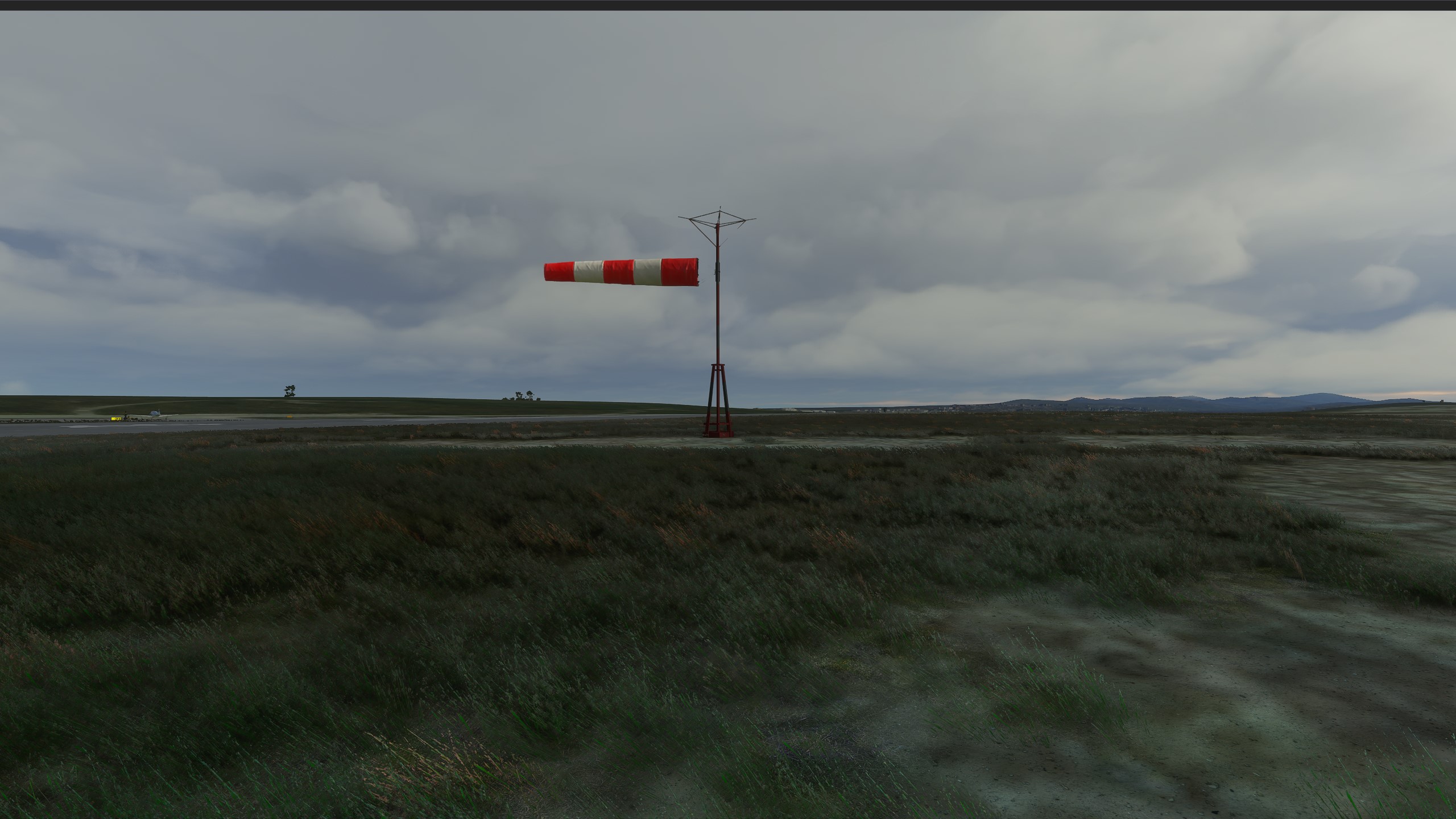
I mean, look at that wind sock. Cut me some slack for f***ck’s sake
Port Stanley does not have instrument approach. It only has a VOR and NDB, but of which are entirely missing in the sim. So this approach was fully visual.
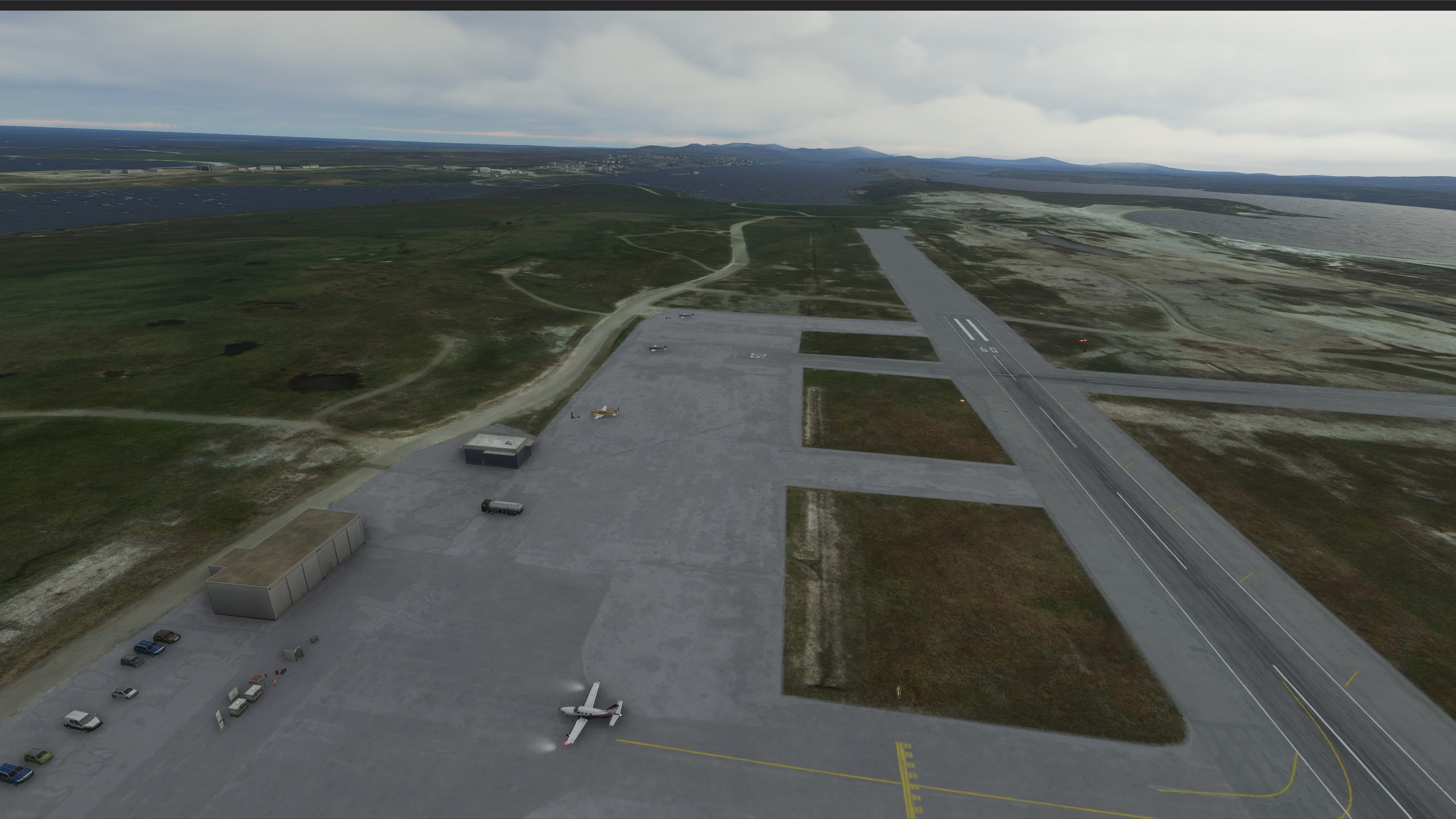
You can see Port Stanley at the top left of this image.
The next flight will be a symbolic one, as we will head towards Ushuaia. This will be the most southern point in our entire world trip. You basically can’t go anymore to the south (at least not with the TBM on a civilian aircraft).
Flight plan
CRV 50S060W